
Industrial Window Cleaning for Facilities: Site Access, Safety and Scheduling
Industrial window cleaning safety and scheduling require more planning than routine cleaning at a small office or storefront. Manufacturing facilities, warehouses, distribution centres and other industrial properties may have restricted areas, active loading zones, production schedules and specialized access requirements.
Before service begins, facility managers and contractors should identify the glass areas being cleaned, determine suitable access methods and plan how the work will be completed without unnecessarily disrupting employees, deliveries or facility operations.

Why Industrial Window Cleaning Requires Detailed Planning
Industrial properties differ considerably in size, layout and daily activity. A cleaning method that works for one facility may be unsuitable for another.
Planning may need to account for:
- Active loading docks
- Truck and forklift traffic
- Employee entrances
- Restricted production areas
- Security procedures
- Elevated windows
- Interior machinery
- Sensitive equipment
- Chemical-storage areas
- Uneven exterior surfaces
- Overhead doors
- Emergency access routes
A site-specific assessment helps the contractor understand these conditions before recommending equipment, scheduling and cleaning methods.
Identify Every Window and Glass Surface
The scope of work should identify every glass area included in the service.
These may include:
- Ground-level exterior windows
- Upper exterior windows
- Office windows
- Entrance doors
- Interior glass partitions
- Loading-area windows
- Clerestory windows
- Skylights
- Control-room glass
- Warehouse viewing panels
- Glass around reception areas
- Windows inside production areas
Facility managers should also confirm whether frames, screens, ledges and surrounding surfaces are included.
A written inventory reduces the risk of missed windows and makes quotations easier to compare.
Complete a Site Assessment Before Quoting
An industrial window cleaning contractor should inspect the facility or collect enough detailed information to understand the project.
The assessment should consider:
- Building height
- Number and condition of windows
- Interior and exterior access
- Ground conditions
- Equipment-placement areas
- Pedestrian routes
- Vehicle routes
- Loading and delivery schedules
- Locked or controlled-access areas
- Overhead obstructions
- Nearby electrical equipment
- Landscaping and exterior fixtures
- Areas requiring facility supervision
Photographs, site drawings and window schedules can help document the property, but they may not replace an on-site assessment when access conditions are complicated.
Industrial Window Cleaning Safety and Scheduling Considerations
Safety planning and scheduling should be developed together. A cleaning method may be technically possible but unsuitable during periods of heavy traffic, active production or frequent deliveries.
Before selecting a service time, confirm:
- Which work areas must remain operational
- When loading docks are busiest
- Whether forklifts use nearby routes
- Which entrances must remain accessible
- Whether interior access requires an escort
- When equipment can be positioned safely
- Whether sections of the property can be temporarily restricted
- Who can authorize schedule changes
- How employees and tenants will be notified
- What happens when weather affects the work
The schedule should provide enough time for the work to be completed without rushing through access preparation or final inspection.
Choose an Appropriate Access Method
Access should be selected according to the building’s height, window location, ground conditions and surrounding activity.
Possible methods include:
Ground-Level Cleaning Tools
Traditional tools may be suitable for easily accessible windows and entrance glass. These areas can sometimes be cleaned separately from upper exterior windows.
Water-Fed Pole Systems
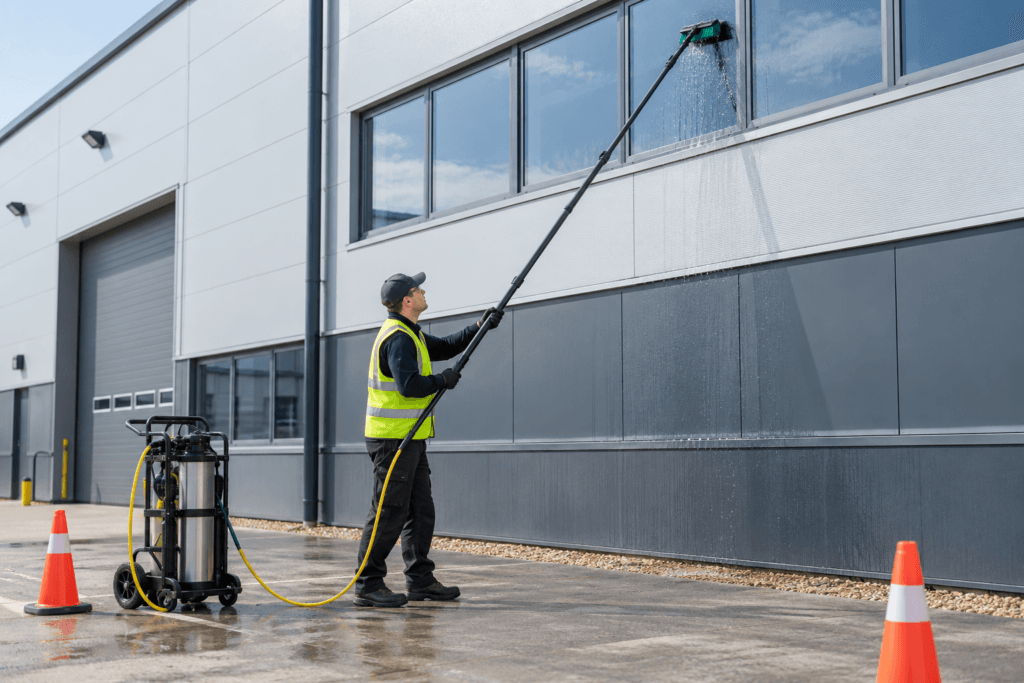
Water-fed poles may allow contractors to clean selected elevated windows from ground level. The suitability of this method depends on the building height, window condition, surrounding space and ability to position the equipment safely.
Ladders
Ladders may be considered for certain areas, but the contractor should assess surface conditions, placement, nearby traffic and the nature of the work before using them.
Elevating Work Platforms
Elevating equipment may be appropriate when the site provides suitable access and stable positioning. Facility managers must consider equipment routes, operating space and how the work zone will affect employees and vehicles.
Specialized Elevated-Access Systems
Some buildings may require specialized access. The proposed contractor should explain why the method is appropriate and what property-specific preparations are required.
Ontario provides official guidance regarding access and fall protection in window cleaning. Facility managers should discuss all applicable safety, access and documentation requirements with qualified contractors before elevated work begins.
Plan Work Zones Around Facility Traffic
Industrial sites may remain active throughout the cleaning project. Work zones should therefore be coordinated with normal facility movement.
Review:
- Truck entrances and exits
- Loading and unloading areas
- Forklift routes
- Employee walkways
- Visitor parking
- Emergency exits
- Accessible entrances
- Waste-collection areas
- Contractor parking
- Delivery staging locations
Warning signs, barriers or temporary route changes may be required depending on the work area. Any restriction should be communicated before the service date.
Emergency routes should remain available, and changes affecting facility access should be approved by the responsible site representative.
Coordinate Interior Access
Interior industrial windows can present different challenges from exterior glass.
Some areas may require:
- Security clearance
- A facility escort
- Protective clothing
- Equipment shutdown
- Relocation of stored materials
- Protection for machinery
- Access outside production hours
- Approval from department supervisors
- Additional housekeeping after service
The contractor should know which areas are restricted and who can provide access. Facility managers should avoid leaving access decisions until the crew arrives.
Select Cleaning Methods for the Facility
Industrial glass may collect more than ordinary dust and water spots.
Possible contaminants include:
- Road film
- Exhaust residue
- Warehouse dust
- Grease
- Pollen
- Bird droppings
- Salt spray
- Adhesive residue
- Construction dust
- Mineral deposits
The cleaning method should match the glass, frames, coatings and surrounding materials. Contractors should assess unfamiliar staining before using aggressive products or tools.
The written quotation should explain whether specialized stain removal is included or priced separately.
Protect Machinery, Products and Interior Surfaces
Interior window cleaning may take place near equipment, inventory, desks or production materials.
Before cleaning begins, determine:
- Which items must be covered
- Whether sensitive equipment must be shut down
- Who is responsible for moving stored materials
- Whether water use is restricted
- Which cleaning products are permitted
- How floors and nearby surfaces will be protected
- How the area will be inspected afterward
A clear division of responsibility prevents confusion on the service date.
Schedule Around Production and Deliveries
The best service time depends on how the facility operates.
Possible scheduling options include:
- Before regular operating hours
- After production ends
- During planned maintenance periods
- On weekends
- During seasonal shutdowns
- One section at a time
- During lower-volume delivery periods
Cleaning the entire facility during one visit may not always be practical. A phased schedule can allow the contractor to complete one zone while other parts of the facility continue operating.
Prepare for Weather and Seasonal Conditions
Exterior window cleaning can be affected by wind, rain, freezing temperatures and changing site conditions.
The service agreement should explain:
- Who evaluates whether conditions are suitable
- How postponements will be communicated
- When cancelled work will be rescheduled
- Whether partial service can be completed
- How unfinished areas will be documented
- Whether rescheduling charges apply
- Who can approve changes to the work plan
Toronto facilities may need different schedules throughout the year because of pollen, construction dust, winter salt and seasonal weather.
Determine an Appropriate Cleaning Frequency
Industrial facilities do not all require the same window-cleaning frequency.
The schedule may be influenced by:
- Traffic near the building
- Production activity
- Loading-dock use
- Exposure to dust or exhaust
- Customer and visitor areas
- Window visibility
- Seasonal salt and road spray
- Nearby construction
- Internal cleanliness requirements
- Facility appearance standards
Some facilities may clean entrance and office glass monthly while scheduling warehouse or upper exterior windows quarterly or seasonally.
Inspect the glass between visits. If certain areas become dirty sooner, place those zones on a more frequent schedule instead of increasing service for every window.
Request a Detailed Written Scope
A professional quotation should clearly state:
- Glass areas included
- Interior and exterior surfaces
- Frames, ledges and screens included
- Access method
- Cleaning method
- Equipment required
- Service schedule
- Facility-access requirements
- Work-zone requirements
- Weather procedures
- Included stain removal
- Additional charges
- Documentation provided
- Areas excluded from service
The scope should also identify who can approve additional work.

Confirm Insurance and Required Documentation
Before hiring a contractor, request current documentation appropriate for the project.
Depending on the property and work, this may include:
- Commercial insurance information
- Workplace documentation
- Worker-training information
- Equipment-inspection records
- Site-specific plans
- Safety procedures
- Emergency contact information
- Subcontractor information
Facility managers should confirm their company’s documentation requirements before selecting a contractor.
Maintain Service Records
Service records help facility managers track completed work and recurring access problems.
The contractor’s report may include:
- Arrival and departure times
- Areas cleaned
- Areas that could not be accessed
- Photographs when appropriate
- Conditions requiring attention
- Damage observed before cleaning
- Schedule changes
- Additional work authorized
- Follow-up recommendations
These records are particularly useful for facilities with multiple buildings, restricted areas or phased maintenance schedules.
Industrial Window Cleaning Checklist
Before approving the work, confirm that you have:
- Identified all glass areas
- Completed a property assessment
- Selected an appropriate access method
- Reviewed pedestrian and vehicle routes
- Coordinated loading-dock activity
- Confirmed interior-access requirements
- Protected equipment and stored materials
- Reviewed cleaning methods and products
- Chosen appropriate service times
- Established weather procedures
- Received required documentation
- Approved a written scope of work
- Assigned an on-site contact
- Planned a final quality inspection
Frequently Asked Questions
How often should an industrial facility schedule window cleaning?
Frequency depends on the facility’s location, production activity, traffic and exposure to dust, exhaust and seasonal residue. Different areas of the same property can follow different schedules.
Can industrial windows be cleaned while the facility is operating?
Some work may be completed during operating hours if access and work zones can be managed safely. Other areas may require cleaning during quieter periods, maintenance windows or shutdowns.
What should be included in an industrial window cleaning quotation?
The quotation should identify the windows included, access method, cleaning process, schedule, exclusions, documentation and potential additional charges.
Can water-fed poles be used at industrial facilities?
Water-fed poles may be suitable for certain windows when the building height, window condition and surrounding area allow them to be positioned and operated appropriately.
Should the contractor inspect the facility first?
A site assessment is advisable when the property has elevated windows, restricted areas, active loading zones, specialized equipment or complicated access conditions.
Can different sections follow different cleaning schedules?
Yes. Entrances and offices may require more frequent cleaning than warehouse, loading-area or upper exterior windows.
Plan Industrial Window Cleaning for Your Facility
Effective industrial window cleaning safety and scheduling begins with a site-specific assessment. Facility managers should identify access restrictions, traffic patterns, sensitive equipment, cleaning requirements and suitable service times before work begins.
OutWash provides commercial window cleaning services in Toronto for industrial facilities, warehouses, offices and managed commercial properties.
Contact OutWash to request a property assessment and discuss an industrial window-cleaning plan based on your facility’s access, safety and operating requirements.