
Commercial Gutter Cleaning Toronto: How Often Should Businesses Schedule Service?
Commercial gutters protect buildings by directing rainwater and melting snow away from roofs, exterior walls, entrances and foundations. When leaves, roof debris and sediment obstruct the system, water can overflow or collect in areas that were not designed to handle it.
Most Toronto businesses should schedule commercial gutter cleaning at least twice per year. However, properties near mature trees, buildings with complex rooflines and facilities with previous drainage problems may require quarterly inspections or additional seasonal service.
The correct schedule depends on the property type, surrounding environment, roof design, operating requirements and drainage risk. This guide explains how facility managers and commercial property owners can determine an appropriate maintenance frequency.
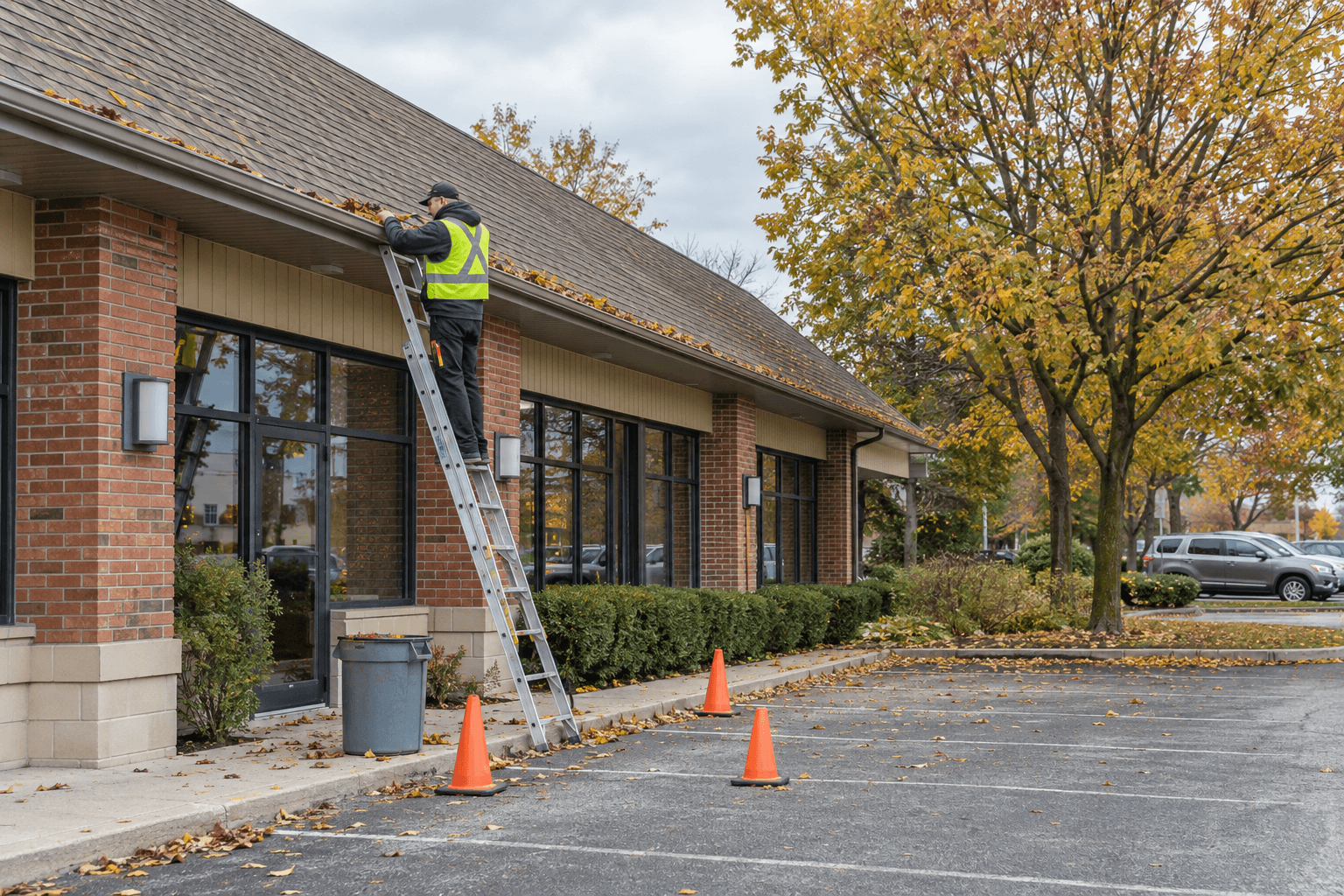
Why Commercial Gutter Cleaning Matters
Commercial buildings often have larger roofs and more extensive drainage systems than residential properties. A single blockage can affect a significant roof area and direct a large amount of water toward walls, entrances or pedestrian spaces.
Regular gutter maintenance helps:
- Keep rainwater moving toward designated drainage points
- Reduce overflowing near entrances and walkways
- Prevent debris from restricting downspouts
- Identify loose or visibly damaged components
- Reduce standing water near the roof edge
- Limit ice buildup caused by obstructed drainage
- Protect exterior walls from repeated water exposure
- Support planned property-maintenance programs
Gutter cleaning does not replace roof, drainage or building-envelope repairs. It helps keep the existing system clear and allows visible concerns to be reported before they become more serious.
The General Recommendation: At Least Twice Per Year
For many Toronto commercial properties, a practical starting point is to schedule service twice per year:
Late Spring
Spring cleaning removes debris left by winter weather and material that accumulated during early tree growth. It also prepares the drainage system for seasonal rain.
Late Fall
Fall service removes leaves, twigs and organic debris before freezing temperatures arrive. Clearing the system before winter may reduce obstructions that contribute to overflow and ice buildup.
Twice-yearly service is a general starting point, not a suitable schedule for every property. Site conditions may justify more frequent inspection and cleaning.
Properties That May Need Quarterly Gutter Cleaning
Some commercial properties should be inspected or serviced every three months. Quarterly maintenance may be appropriate when a building has:
- Mature trees close to the roofline
- Heavy leaf, seed or needle accumulation
- Multiple roof sections and drainage points
- Previous gutter or downspout blockages
- A high volume of windblown debris
- Flat or low-slope roof areas draining into gutters
- Difficult-to-observe drainage components
- Sensitive pedestrian or customer areas below
- Limited tolerance for drainage interruptions
- Ongoing construction nearby
A quarterly schedule allows maintenance teams to address seasonal buildup before it develops into a complete blockage.
How Property Type Affects Cleaning Frequency
Different commercial properties face different operating and drainage risks. The maintenance schedule should reflect how the building is used and what areas could be affected by overflowing water.
Retail Properties
Retail buildings may have customer entrances, sidewalks, signs and storefront windows directly below the roofline. Overflowing water can affect pedestrian areas and the appearance of the exterior.
Retail properties should generally receive spring and fall cleaning, with additional inspections when trees are located near the building.
Office Buildings
Office buildings often have regular pedestrian traffic near entrances and parking areas. Properties with simple rooflines may require service twice per year, while larger or multi-level buildings may need quarterly inspection.
Restaurants and Food-Service Properties
Restaurants may have roof-mounted equipment, exhaust systems and service areas that contribute additional material to the roof environment. Their drainage systems should be inspected according to the building configuration and the amount of debris present.
Warehouses and Industrial Facilities
Warehouses frequently have large roof areas, long gutter runs and numerous downspouts. A blockage can affect a substantial drainage area before the problem becomes visible from ground level.
Facilities with large roofs should use scheduled inspections and documented maintenance rather than waiting for visible overflow. A dedicated guide to warehouse gutter cleaning can provide more detail for these properties.
Multi-Unit and Managed Properties
Property managers responsible for several buildings need a repeatable service schedule. Spring and fall maintenance may be sufficient for lower-risk buildings, while sites with trees, complex roofs or a history of drainage problems may require quarterly visits.
Consider the Number and Location of Nearby Trees
Trees are one of the most important factors affecting gutter-cleaning frequency. Leaves are not the only concern. Seeds, blossoms, needles, small branches and organic material may also enter the system.
A property may require additional cleaning when:
- Branches extend over the roof
- Several mature trees surround the building
- Evergreen needles accumulate throughout the year
- Seeds or blossoms fall heavily during spring
- Wind regularly carries leaves onto the roof
- Wet organic debris remains inside the gutter
Properties without nearby trees can still experience blockages from roof material, windblown litter, sediment and animal nesting. Tree exposure should be considered alongside the other site conditions.

Evaluate the Roof Design and Drainage System
Roof design influences how debris moves and where it collects. A simple sloped roof with short gutter runs may be easier to maintain than a building with several roof levels, internal drainage areas or long downspout routes.
Important design factors include:
- Total roof area
- Roof slope
- Number of roof sections
- Length of gutter runs
- Number and placement of downspouts
- Valleys that direct debris toward specific areas
- Roof-mounted equipment
- Canopies and lower roof sections
- Areas that cannot be inspected from the ground
- Connections to underground drainage systems
A contractor should consider these features when recommending a service frequency. A fixed schedule based only on building size may overlook important drainage risks.
Increase Service During Heavy Leaf Fall
A late-fall appointment may not be enough when trees release leaves over several weeks. Cleaning too early can leave the gutters full again before winter begins.
For heavily treed properties, consider:
- An initial cleaning during the main leaf-fall period
- A follow-up inspection after most leaves have fallen
- A final check before persistent freezing conditions arrive
The timing should respond to actual site conditions rather than a fixed calendar date.
Inspect Gutters After Severe Weather
Wind and heavy rain can move debris across roofs and into drainage systems. Severe weather may also loosen visible gutter components or overwhelm partially blocked downspouts.
An additional inspection may be appropriate after:
- High-wind events
- Prolonged heavy rainfall
- Significant storms carrying branches and debris
- Freeze-and-thaw periods
- Roof or exterior construction
- Tree trimming near the building
- Reports of water overflowing near entrances
Post-storm inspections can be focused on high-risk areas instead of automatically requiring full cleaning every time.
Watch for Signs That Service Is Needed Sooner
Do not wait for the next scheduled appointment if the property shows signs of restricted drainage.
Warning signs include:
- Water spilling over the gutter edge
- Plants or visible debris growing from the gutter
- Water staining on exterior walls
- Downspouts releasing little or no water during rain
- Water collecting near the building
- Sagging or separated gutter sections
- Unusual ice buildup near the roof edge
- Debris washing onto sidewalks
- Water appearing near entrances or loading areas
These signs may indicate a blockage, improper drainage or a damaged component. Arrange an inspection to identify the cause.
Include Downspouts in the Maintenance Plan
Clearing the visible gutter channel is only part of the service. Downspouts move water from the roofline toward the intended discharge area. A blockage inside a downspout may remain hidden even after loose debris has been removed from the gutter.
Ask the contractor to explain:
- How accessible downspouts are checked
- Whether flow testing is included
- How blockages are cleared
- Whether underground connections are included
- How disconnected or damaged components are reported
- Which conditions may result in additional charges
The service report should distinguish between routine clearing and repairs that require separate drainage or roofing work.
Schedule Service Around Business Operations
Commercial gutter cleaning may involve ladders, elevated equipment, controlled work areas and temporary restrictions near entrances or parking spaces. Scheduling should reduce disruption while allowing crews to work safely.
Before the appointment, discuss:
- Business operating hours
- Customer and employee entrances
- Loading and delivery schedules
- Parking restrictions
- High-traffic pedestrian periods
- Access to locked service areas
- Equipment staging locations
- Areas requiring cones or barriers
- Emergency-access requirements
Some businesses may prefer early-morning, evening or lower-traffic service, depending on the site and contractor availability.
Require Service Documentation
Many commercial gutters cannot be safely inspected from the ground. Photographs and service reports help property managers confirm what was completed.
Request documentation showing:
- Arrival and departure times
- Areas cleaned
- Debris removed
- Downspouts checked
- Before-and-after photographs
- Visible damage or drainage concerns
- Inaccessible areas
- Recommended follow-up work
- Suggested timing for the next visit
Consistent records also help determine whether the current cleaning frequency is appropriate. Repeated heavy buildup may indicate that service should occur more often.
Create a Property-Specific Maintenance Schedule
A commercial gutter-cleaning schedule should be based on observed conditions instead of applying the same frequency to every property.
Use the following approach:
Step 1: Begin with a Site Assessment
Identify the roof design, total gutter length, downspouts, access limitations, surrounding trees and sensitive areas below the roofline.
Step 2: Establish a Starting Frequency
For a lower-risk building, begin with spring and fall service. Use quarterly inspections for properties with heavier debris exposure or more complicated drainage systems.
Step 3: Review the Service Reports
Compare the amount of debris and number of blockages found during each visit.
Step 4: Adjust the Schedule
Increase the frequency if crews repeatedly find full gutters, blocked downspouts or overflow evidence. Reduce unnecessary visits only when consistent inspection records show that the system remains clear.
Step 5: Account for Unusual Events
Add inspections after severe storms, nearby construction or other events likely to affect the roof and drainage system.

Suggested Commercial Gutter Cleaning Frequency
Use this general guide as a starting point:
Twice Per Year
Suitable for many properties with uncomplicated rooflines, limited tree exposure and no history of drainage problems.
Three Times Per Year
May suit buildings with moderate tree coverage, seasonal debris or areas that need an additional midsummer or late-fall visit.
Quarterly
Consider quarterly service for heavily treed properties, large facilities, complex roofs and buildings with repeated blockages.
Monthly or Condition-Based Inspections
High-risk facilities may need frequent visual inspections, especially during heavy leaf fall or periods of severe weather. Full cleaning should be performed when conditions require it.
The contractor should confirm the final schedule after assessing the property.
Commercial Gutter Maintenance Checklist
Before approving a maintenance plan, confirm that it addresses:
- Spring and fall service requirements
- Tree and seasonal debris exposure
- Roof size and design
- All accessible gutters and downspouts
- High-risk entrances and pedestrian areas
- Equipment and access requirements
- Cleanup and debris disposal
- Before-and-after photographs
- Service records
- Storm-related inspections
- Additional-service pricing
- Procedures for reporting visible damage
A written plan helps ensure that both the contractor and property manager understand the required work.
Frequently Asked Questions
How often should commercial gutters be cleaned in Toronto?
Many commercial properties should begin with twice-yearly cleaning in spring and fall. Buildings near trees, large facilities and properties with repeated blockages may require quarterly service or additional inspections.
What is the best time of year for commercial gutter cleaning?
Late spring and late fall are common service periods. Properties with heavy tree exposure may need an additional visit during or after peak leaf fall.
Should downspouts be checked during gutter cleaning?
Yes. Ask whether downspout inspection, clearing and flow testing are included in the quoted service.
Do commercial buildings need more frequent gutter cleaning than homes?
Some do. Commercial buildings may have larger roofs, longer gutter runs, more drainage points and greater consequences when water reaches entrances or pedestrian areas.
How can a property manager determine the correct schedule?
Begin with a professional property assessment and review the amount of debris, blockages and visible concerns documented after each service. Adjust the frequency according to the evidence.
Schedule Commercial Gutter Cleaning in Toronto
The correct gutter-cleaning frequency depends on the building, nearby trees, roof design, seasonal debris and drainage history. Regular inspections and documented service make it easier to adjust the maintenance schedule before blockages cause visible overflow.
OutWash provides commercial gutter cleaning services in Toronto for businesses and managed properties. Contact the team to request a property assessment and develop a service schedule based on your building’s drainage system, access requirements and operating hours.