
Reasons 1 to 5: Water, Cleaner and Tools
Most streaks start with what goes on the glass.
1. Minerals in Tap Water
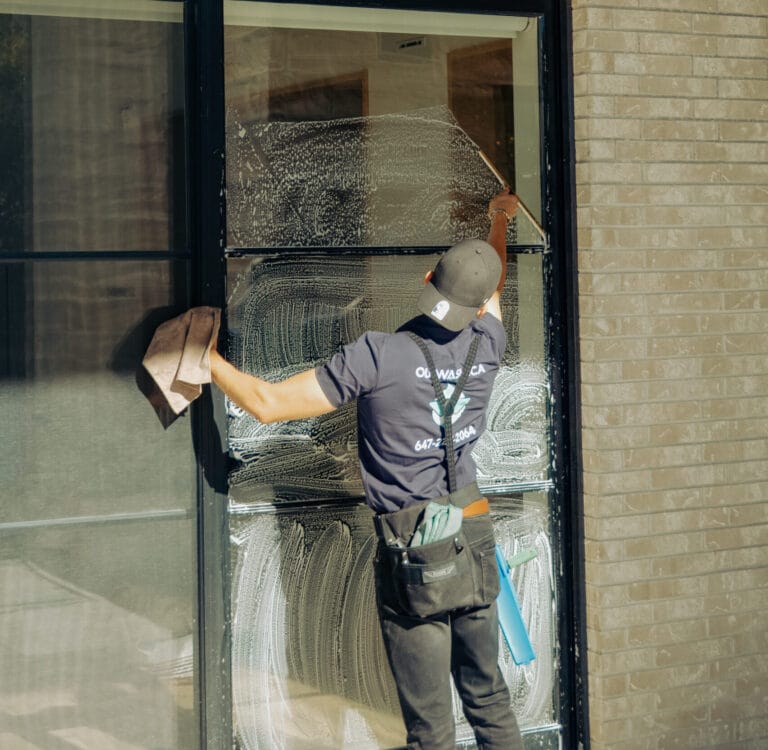
Tap water carries dissolved minerals. Let a film of it dry on the glass, and the minerals stay behind as spots. Dry the glass with a cloth before it air-dries.
2. Too Much Cleaner
More soap does not mean cleaner glass. The extra leaves a film that smears as you wipe. A small amount, rinsed off well, works better.
3. A Dirty Cloth
Once a cloth is full of grime, it just spreads it around. Swap it for a clean, dry one as soon as it looks grey.
4. Paper Towels
Paper towels and some cloths leave lint on wet glass. A lint-free microfibre cloth avoids it.
5. A Worn Squeegee Blade
A nick in the rubber drags a thin wet line across every pass. When the edge stops being straight, replace the blade.
Reasons 6 to 10: Timing and Technique
6. Cleaning in Direct Sun
On the sunny side of the house, the cleaner dries before you get to it and sets as streaks. Wait for shade or a cloudy day.
7. Wiping Dry Dirt
Dust plus a wet cloth makes mud. Brush or rinse off the loose dirt first, then wash.
8. Starting at the Bottom
Drips from the top run down over the part you already did. Start at the top and work down.
9. Wet Edges
Water left in the corners and along the frame creeps back onto the glass and dries in a line. Wipe the edges dry at the very end.
10. Dirty Frames and Screens
The next rain washes dirt from dirty frames and screens onto clean glass. Wipe them down on the same day as the windows.
How to Tell Which Side the Streak Is On
Wipe the inside of the glass with side-to-side strokes and the outside with up-and-down strokes. If a streak runs sideways, it is on the inside. If it runs up and down, it is on the outside.
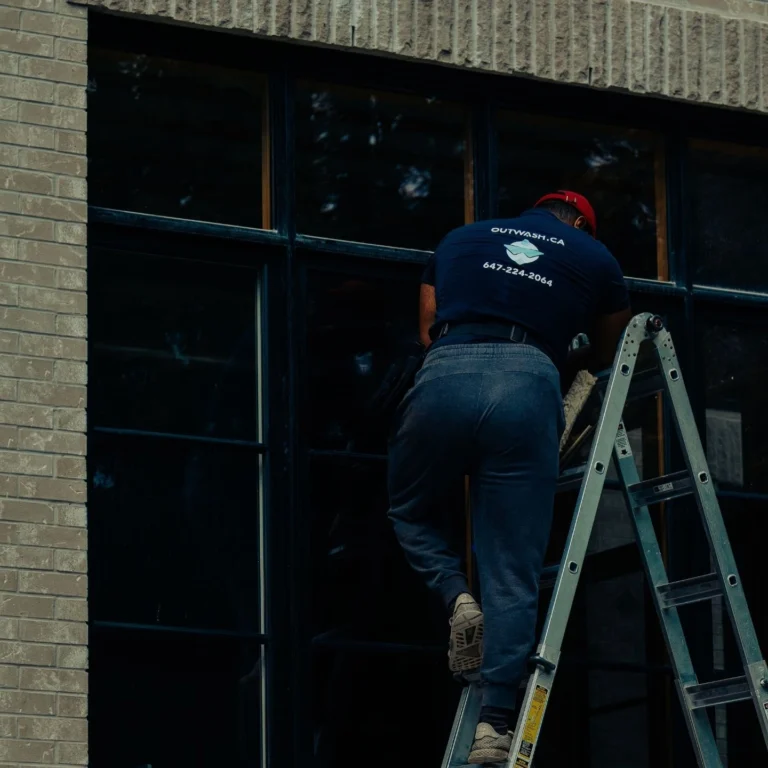
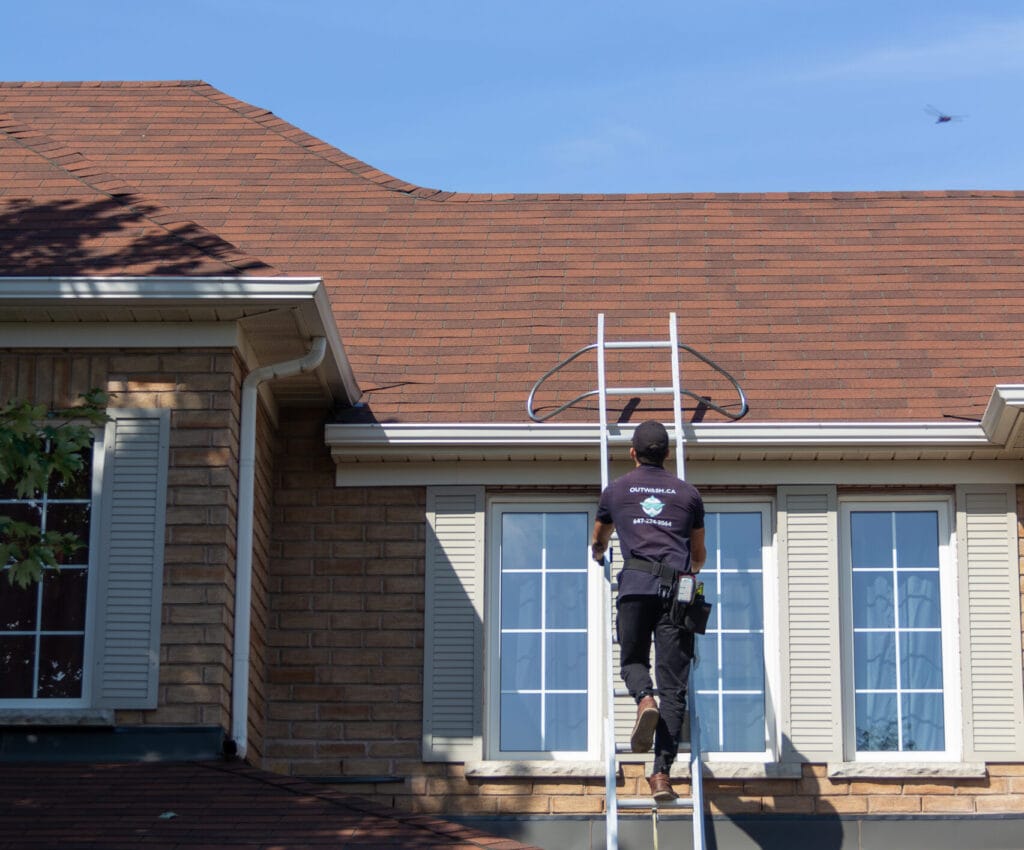
On a second storey, the outside is the hard part. You can only reach it from a ladder or with a long pole.
How Pure Water Window Cleaning Avoids Spots
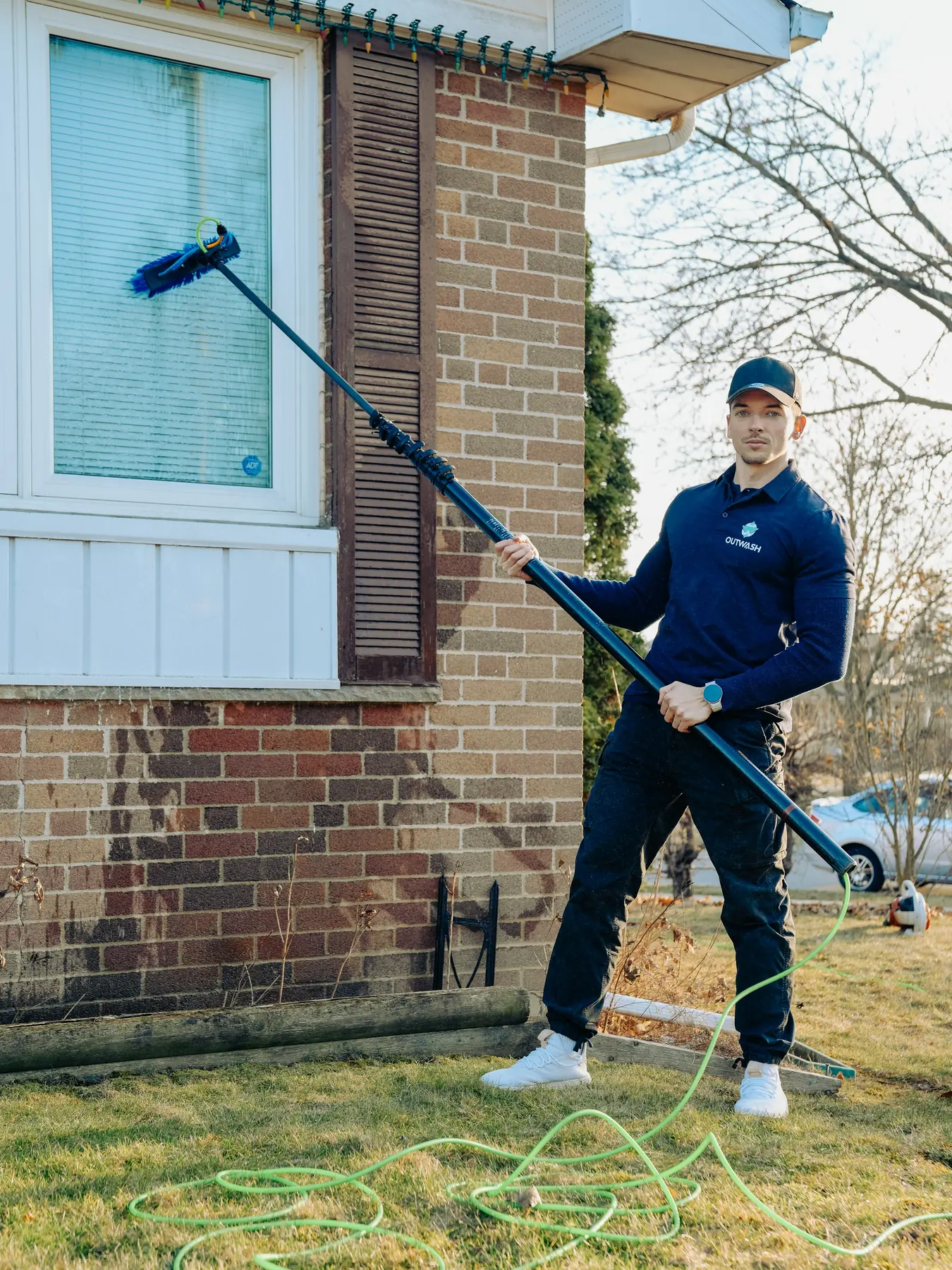
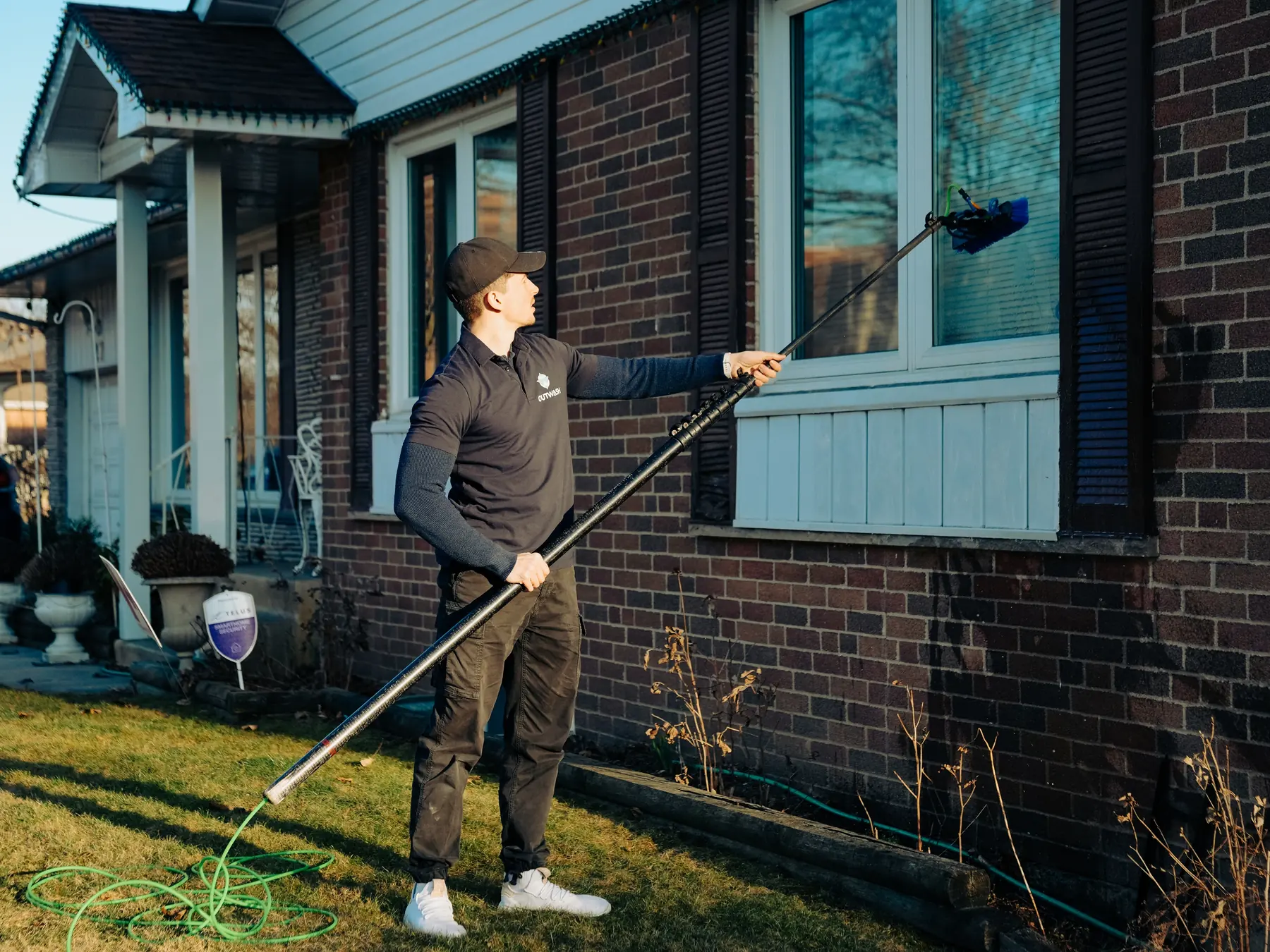
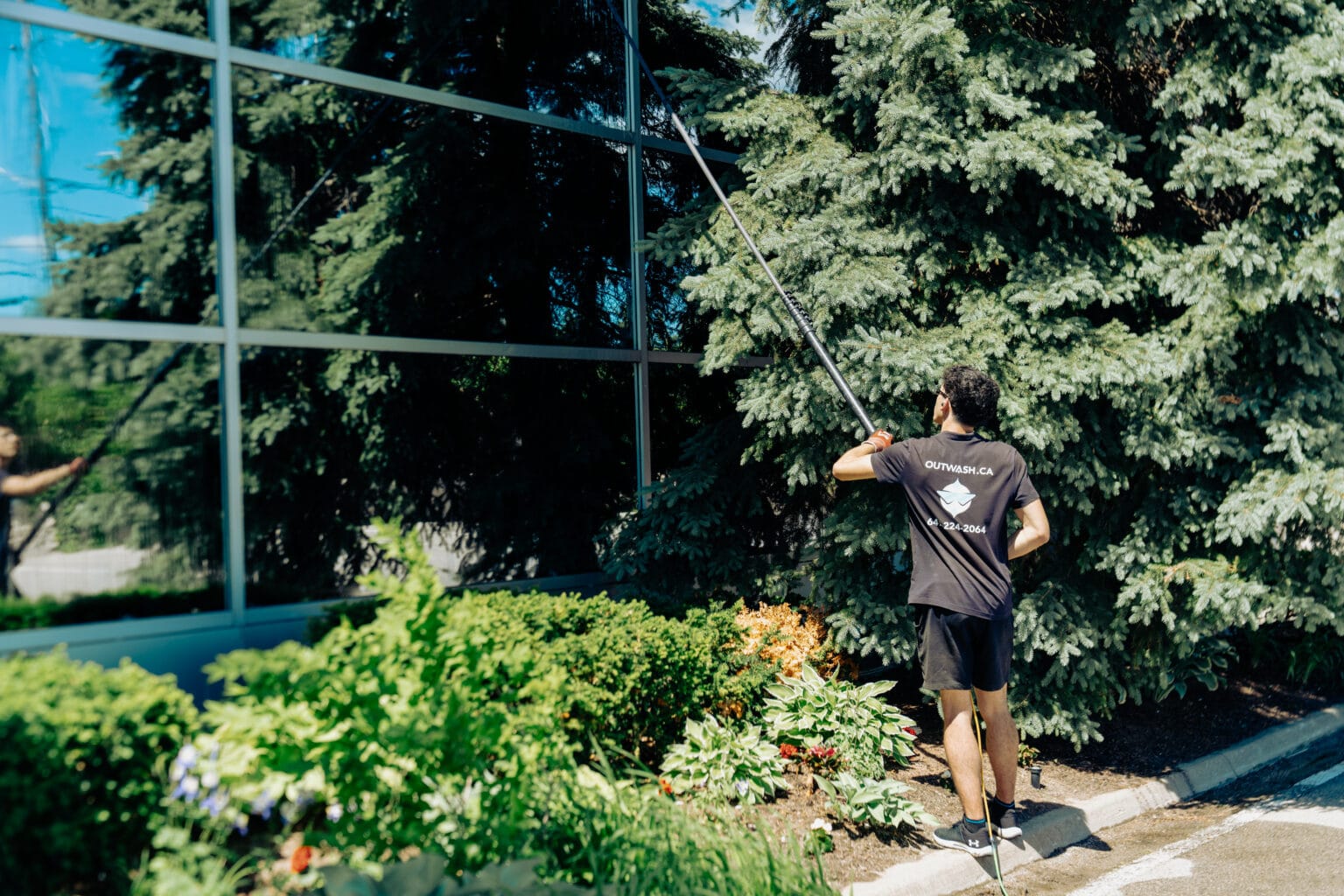
On homes and buildings up to 6 storeys, we mostly clean windows with water-fed poles. The water first runs through a four-stage filter.
It takes out the dissolved solids, down to 0 ppm, so nothing is left to dry as spots. We scrub the glass with the brush on the end of the pole and rinse it with the same pure water.
Less often, we use a ladder and a squeegee. On request, we also clean the inside of your windows, and your screens and tracks. See our residential window cleaning service for more.

When Window Cleaning Is a Job for a Crew
Do the windows you can reach from the ground. For the rest, it is safer to call a crew with the right equipment.
That means second-storey glass and windows above a deck or a slope. Anything you would need a tall ladder for belongs on that list too. All Outwash technicians are covered by WSIB and by our $5 million liability insurance. Every crew member who works off the ground holds Working at Heights certification.
For prices, see our window cleaning cost guide. For more tips you can try yourself, read our window cleaning hacks.


Window Streak Questions
Can’t find your question below? Call us at 1-647-224-2064.
Why do my windows streak after I clean them?
Something was left on the glass as it dried. Start with the water and the cleaner you used, then check your cloth or squeegee.
Is it better to clean windows on a sunny day?
No. Heat and sun dry the cleaner before you can wipe it off. An overcast day, or the shady side of the house, gives you more time.
Does Toronto have hard water?
Not by the City’s measure. The City of Toronto says its tap water has relatively low mineral levels. Water that dries on glass can still leave faint spots.
What is water-fed pole window cleaning?
The water runs through a four-stage filter that takes out the dissolved solids, down to 0 ppm. The crew scrubs the glass with a brush on a long pole and rinses it with the same pure water.
How often should windows be cleaned?
Twice a year, in spring and fall, works for most homes. Windows facing a busy road or under trees get dirty faster.
Are your window cleaners insured?
Yes. All Outwash technicians are covered by WSIB and by our $5 million liability insurance.
Related Services
See what else we clean around your home.
More home maintenance tips are on our blog.
Send Us a Message. We’d Love to Help.
Tell us about your windows and we’ll send you a free quote. Prefer to talk? Call us at 1-647-224-2064.
Toronto, Ontario M5C 1C4