
How Road Salt Affects Commercial Building Exteriors in Toronto
Road salt helps keep Toronto commercial properties accessible during winter, but the residue left behind can accumulate on entrances, sidewalks, parking areas and lower building surfaces. As snow and ice melt, salt can be carried across a property by vehicles, footwear, snow-removal equipment and drainage. The resulting white residue, staining and embedded grime can remain visible long after winter ends.
Commercial building salt removal in Toronto should therefore be included in a property’s winter and spring exterior-maintenance plan. Cleaning the affected surfaces at the right time can improve the building’s appearance, reveal areas that need inspection and prevent salt residue from remaining on exterior materials throughout the year.
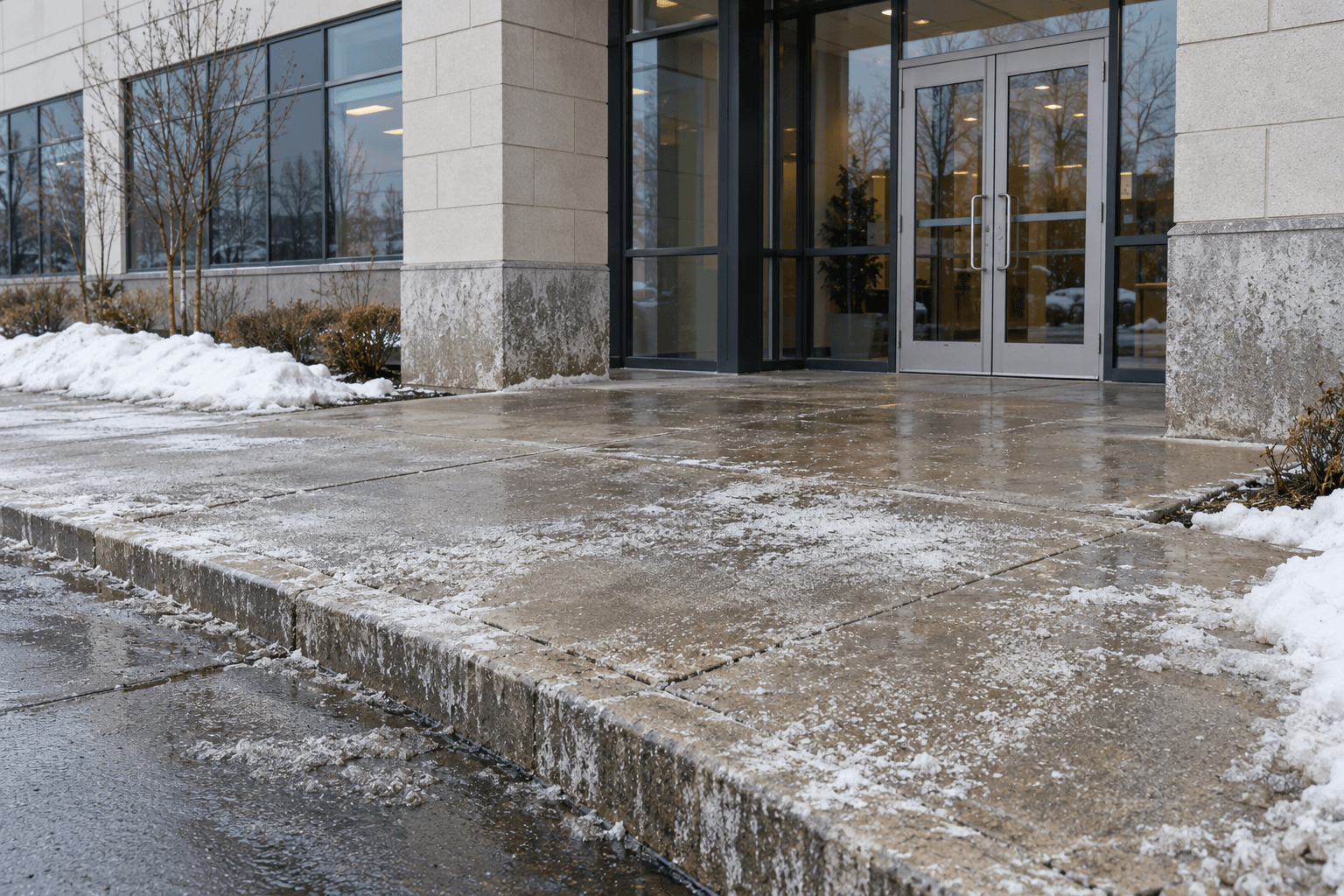
Where Road Salt Accumulates Around Commercial Properties
Salt residue is rarely distributed evenly across a property. It usually collects in areas exposed to treated roads, pedestrian traffic, vehicle movement and melting snow.
Inspect the following locations:
- Main and secondary entrances
- Concrete sidewalks
- Accessibility ramps
- Exterior stairs
- Parking-lot entrances
- Underground garage entrances
- Loading docks
- Delivery routes
- Curbs and wheel stops
- Lower portions of building façades
- Areas beside snow-storage piles
- Drainage channels and catch-basin surroundings
Property managers should also inspect indoor entrance areas because salt can be carried inside on footwear, carts and equipment.
Where Road Salt Accumulates Around Commercial Properties
Salt residue is rarely distributed evenly across a property. It usually collects in areas exposed to treated roads, pedestrian traffic, vehicle movement and melting snow.
Inspect the following locations:
- Main and secondary entrances
- Concrete sidewalks
- Accessibility ramps
- Exterior stairs
- Parking-lot entrances
- Underground garage entrances
- Loading docks
- Delivery routes
- Curbs and wheel stops
- Lower portions of building façades
- Areas beside snow-storage piles
- Drainage channels and catch-basin surroundings
Property managers should also inspect indoor entrance areas because salt can be carried inside on footwear, carts and equipment.
How Road Salt Reaches Building Surfaces
Salt is commonly applied to driveways, roads, sidewalks and entrances during freezing weather. It can then travel beyond the original application area.
Common causes include:
- Melting snow carrying salt toward lower surfaces
- Vehicles splashing salty water onto walls and curbs
- Pedestrians tracking residue through entrances
- Snowplows moving treated snow into storage areas
- Wind pushing salt and fine debris across paved surfaces
- Repeated de-icing applications throughout winter
- Drainage directing contaminated meltwater toward the building
Understanding how salt travels across the property helps identify the areas that require the most frequent inspection and cleaning.
What Salt Residue Looks Like
Road salt residue can appear differently depending on the surface, moisture level and amount of buildup.
Look for:
- White or pale-grey deposits
- Chalky residue
- Streaks beneath windows or ledges
- Discoloration on concrete
- Dirty water lines near entrances
- Crusty buildup around curbs
- Salt deposits beside drains
- Stains on lower façade sections
- Residue around metal doors and frames
Salt can also mix with dirt, oil, sand and vehicle residue, creating darker stains that require more than a basic rinse.
Which Commercial Exterior Surfaces Are Affected?
Road salt can accumulate on several types of exterior surfaces. Each material should be assessed before cleaning begins.
Concrete Sidewalks and Entrance Pads
Concrete around entrances is exposed to frequent de-icing and pedestrian traffic. Salt, sand and dirty meltwater can settle into textured surfaces and joints.
Brick and Masonry
Lower brick and masonry surfaces may receive salt spray from nearby roads, parking lots or sidewalks. White deposits should be assessed carefully because some staining may also be caused by moisture-related mineral movement.
Metal Doors, Frames and Railings
Salt residue can collect around metal entrance components, loading areas, railings and service doors. These areas should be cleaned using methods appropriate for their finishes and coatings.
Exterior Glass
Salty spray and melting snow can leave spots or streaks on storefront windows, entrance glass and lower-level windows.
Interlocking Pavers
Salt, sand and winter debris may gather between pavers and around drainage areas. Cleaning should avoid unnecessarily disturbing jointing material.
Parking and Loading Areas
These areas can accumulate salt alongside oil, grease, tire marks and industrial residue. They may require targeted treatment based on the contaminants present.
When Should Commercial Salt Residue Be Removed?
The appropriate schedule depends on the severity of winter conditions and the property’s traffic.
During Winter
Spot cleaning may be appropriate when heavy residue accumulates around entrances, provided weather and surface conditions allow the work to be completed safely. Priority should be given to areas where salt, sand and dirty slush are repeatedly tracked through the building.
After Major Snow Events
Inspect entrances, loading zones and areas beside snow-storage piles after major storms. Large amounts of treated snow can leave concentrated residue when they melt.
Why a Basic Rinse May Not Be Enough
A garden hose or light rinse may remove loose material but leave embedded residue behind. Salt often mixes with grease, sand, soil and traffic film.
Effective cleaning may require:
- Dry removal of loose sand and debris
- Surface assessment
- Pretreatment of affected areas
- An appropriate cleaning solution
- Controlled pressure washing
- Soft washing for sensitive surfaces
- Multiple passes in heavily affected locations
- Proper collection of loosened debris
- Final inspection after the surface dries
The method should match the material being cleaned. Excessive pressure can damage mortar, paint, sealants and other vulnerable finishes.
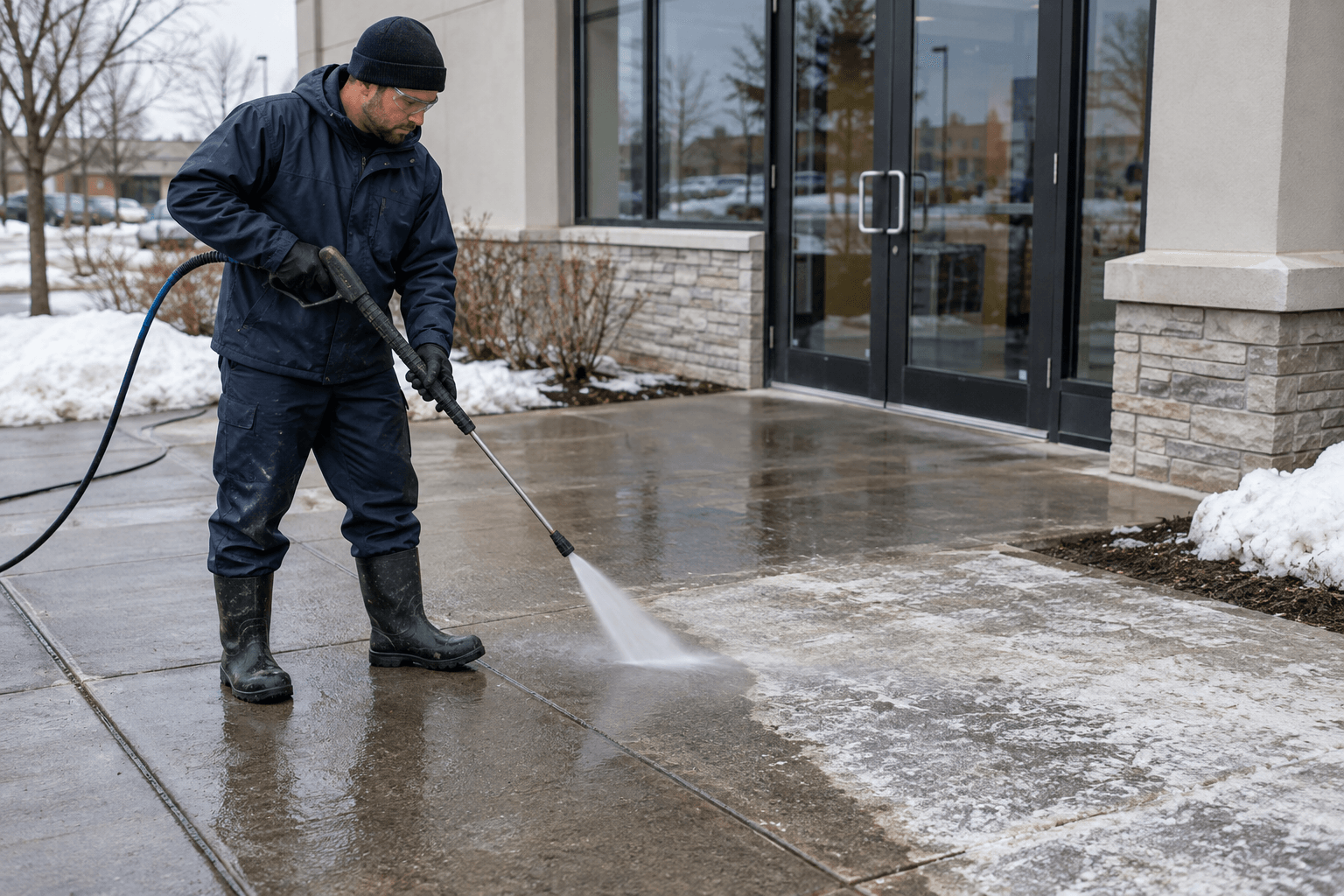
Pressure Washing Versus Soft Washing
Not every salt-affected surface should receive the same treatment.
Pressure Washing
Controlled pressure washing may be suitable for durable surfaces such as:
- Concrete
- Some paved areas
- Certain loading zones
- Selected parking surfaces
The contractor should adjust the pressure, nozzle and distance according to the surface’s condition.
Plan for Pedestrians and Business Operations
Commercial exterior cleaning may affect entrances, parking areas, loading zones and public walkways.
Before scheduling the work, confirm:
- Building operating hours
- Peak customer and tenant periods
- Delivery schedules
- Accessible entrance requirements
- Areas that can be temporarily closed
- Alternate pedestrian routes
- Equipment placement
- Parking restrictions
- Required tenant notices
- Drying time
- Weather and temperature conditions
Cleaning should be scheduled to reduce disruption while keeping essential entrances and emergency routes accessible.
Soft Washing or Low-Pressure Cleaning
Lower-pressure methods may be more appropriate for:
- Painted surfaces
- Some façades
- Sensitive masonry
- Exterior panels
- Areas with ageing sealants
- Delicate architectural finishes
A test area can help determine whether the selected method is appropriate before cleaning a larger section.
Cleaning should begin with a property assessment. Salt residue may cover cracks, deteriorated joints, loose coatings and other conditions that require attention.
Record:
- Existing cracks
- Loose mortar
- Peeling paint
- Damaged sealants
- Corroded metal
- Stained areas
- Poor drainage
- Standing water
- Blocked catch basins
- Areas affected by repeated salt application
Take photographs before service begins. This creates a record of the property’s condition and helps distinguish existing damage from the results of cleaning.
Control Wastewater and Loosened Contaminants
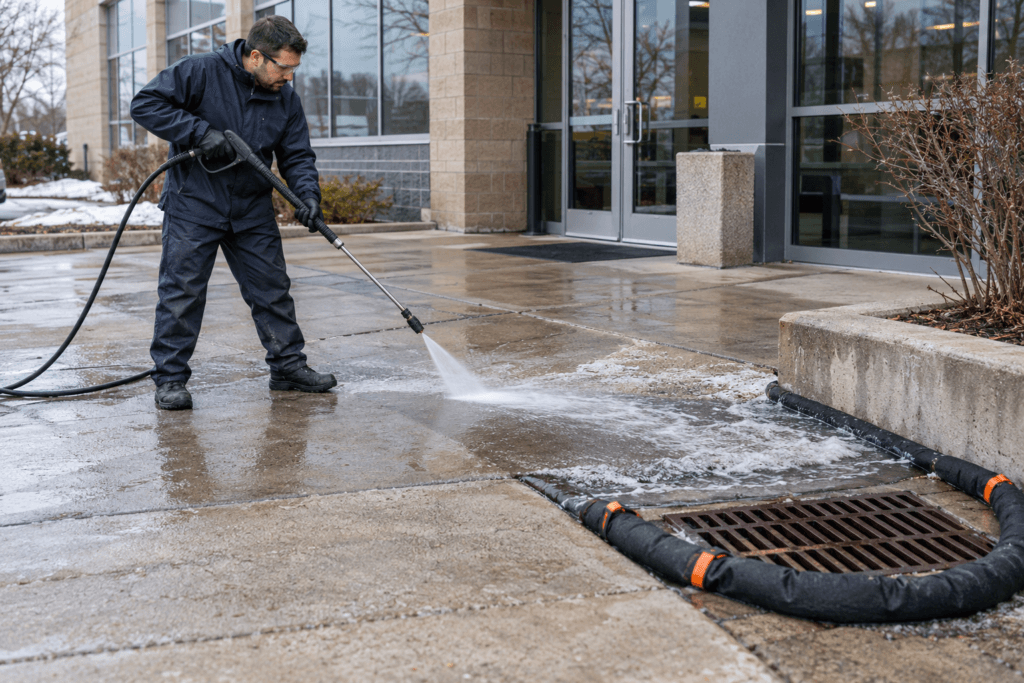
Exterior washing can dislodge road salt, oil, dirt and cleaning products. The wastewater should not be allowed to enter catch basins or storm drains without appropriate controls.
The City of Toronto explains that wastewater from outdoor washing must not reach catch basins because soaps and contaminants removed from surfaces can violate storm-sewer limits. The guidance also applies when power washing uses water without added cleaning products.
Before work begins:
- Locate nearby storm drains and catch basins
- Identify the property’s drainage direction
- Remove loose debris using dry methods
- Protect drainage points where required
- Plan how wastewater will be contained
- Confirm how collected debris will be disposed of
- Review whether additional site-specific requirements apply
Create a Road-Salt Cleaning Checklist
Before scheduling service, confirm that you have:
- Inspected entrances and walkways
- Checked parking and loading areas
- Examined lower sections of the façade
- Identified the affected surface materials
- Documented existing damage
- Located drains and catch basins
- Removed loose sand and debris
- Selected a surface-appropriate method
- Planned pedestrian and vehicle access
- Reviewed weather and temperature conditions
- Confirmed wastewater controls
- Requested a written scope of work
- Planned a final inspection
Prevent Excessive Salt Buildup
Commercial properties still need effective winter maintenance, but property managers can reduce unnecessary residue by reviewing how de-icing material is applied and how treated snow is stored.
Consider:
- Following the application guidance for the selected de-icing product
- Avoiding unnecessary overapplication
- Regularly removing loose salt from entrance areas
- Using entrance mats to reduce indoor tracking
- Monitoring drainage around snow-storage locations
- Inspecting heavily treated areas after storms
- Scheduling spot cleaning when conditions allow
- Including spring exterior cleaning in the maintenance calendar
Winter safety remains the priority. Any changes to de-icing practices should still support safe access and follow the property’s winter-maintenance plan.
Frequently Asked Questions About Heavy Equipment Cleaning
When should road salt be cleaned from a commercial building?
There is no universal frequency. Construction equipment should be inspected regularly and cleaned according to jobsite conditions, usage and the amount of mud, dust or other buildup present. Equipment working in difficult conditions may require much more frequent cleaning than machinery used occasionally on paved surfaces.
Can pressure washing remove salt from concrete?
Equipment and fleet vehicles exposed to Toronto roads may require additional attention during winter because of salt, brine, slush and road grime. Cleaning frequency should reflect how much seasonal buildup the equipment experiences.
Can road salt affect exterior metal surfaces?
Cleaning can be useful before inspections or planned maintenance when excessive mud and grime make components more difficult to access or examine. The cleaning schedule can therefore be coordinated with preventive maintenance when practical.
Should salt residue be removed before painting?
No. Heavy machinery can contain sensitive electrical components, bearings, seals, sensors and other areas that require additional care. Manufacturer guidance should always be followed, and cleaning pressure and technique should be appropriate for the machine and component being cleaned.
Can outdoor washing water enter a storm drain?
Fleet washing can be scheduled for multiple vehicles or machines, but the best approach depends on operational requirements and equipment availability. Businesses may choose to clean equipment in groups so that work can continue with minimal disruption.
Schedule Commercial Building Salt Removal in Toronto
Road salt can accumulate across entrances, sidewalks, façades, parking areas and loading zones during a Toronto winter. A planned inspection and cleaning schedule helps property managers address residue using methods appropriate for each surface.
OutWash provides commercial exterior cleaning services in Toronto for offices, retail properties, warehouses, condominiums and managed commercial buildings.
Contact OutWash to request a property assessment and discuss road-salt removal for your commercial property.