
How Often Should Heavy Equipment Be Pressure Washed? A Toronto Fleet Maintenance Guide
Heavy equipment is built to work in demanding conditions, but that does not mean dirt, mud, road grime and seasonal buildup should be left on machinery indefinitely. For construction companies, fleet operators, industrial facilities and property maintenance teams, one common question is: how often should heavy equipment be pressure washed?
There is no single cleaning schedule that works for every machine. Equipment operating daily on muddy construction sites may need attention much more frequently than machinery that spends most of its time in a paved yard or warehouse environment. Toronto’s winter conditions can also change the schedule as salt, slush and road grime accumulate on vehicles and equipment.
The right approach is to base cleaning frequency on operating conditions, equipment use, seasonal exposure and scheduled maintenance rather than simply choosing a fixed number of washes per year.
In this guide, we’ll look at the factors that determine how often heavy equipment should be cleaned, when additional washing may be worthwhile, and how businesses can build pressure washing into a practical fleet maintenance schedule.
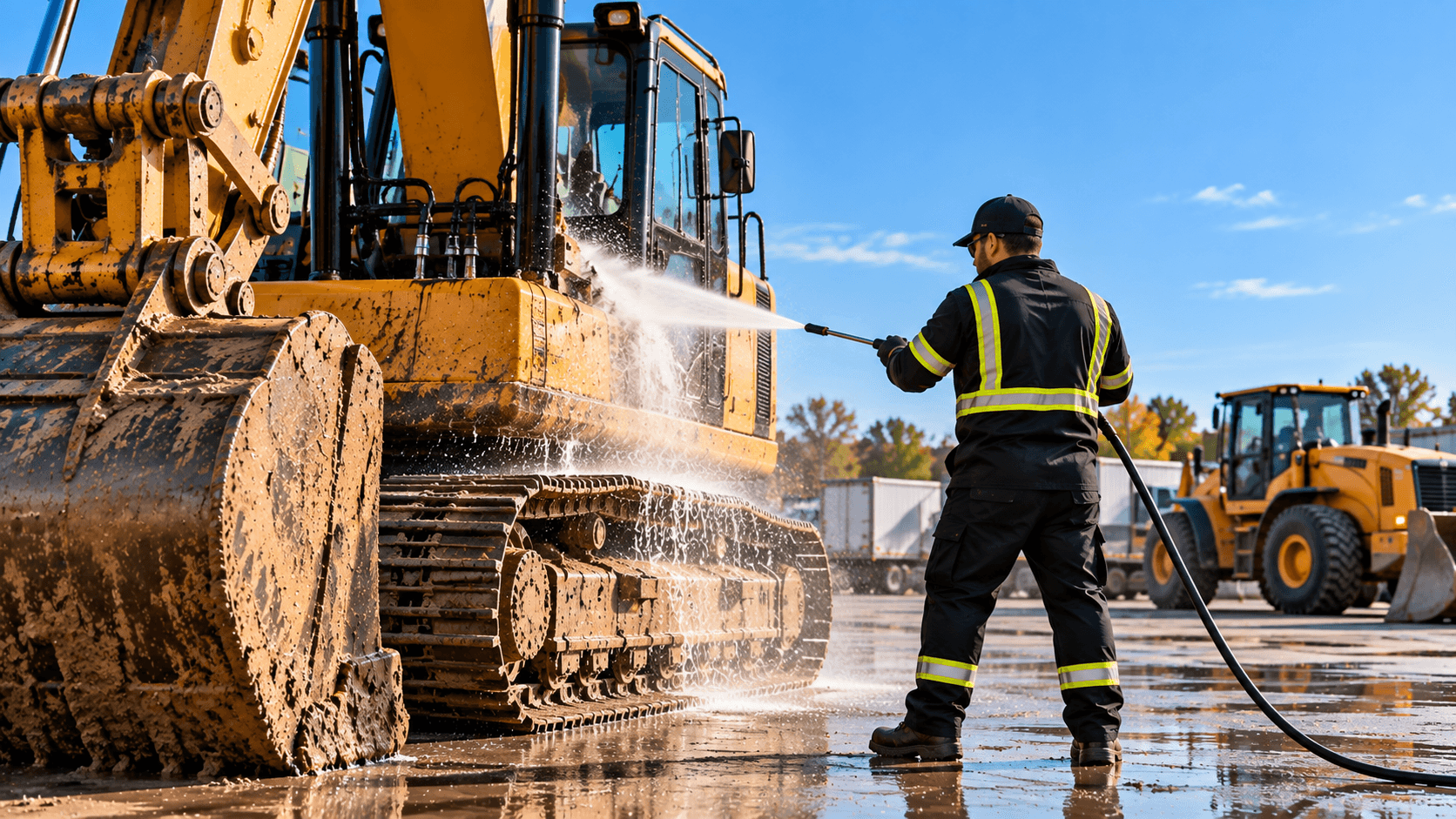
So, How Often Should Heavy Equipment Be Pressure Washed?
Heavy equipment should generally be cleaned according to how quickly dirt and contaminants accumulate rather than according to one fixed schedule.
A machine that works every day in mud, dust or road conditions may need washing far more frequently than equipment used occasionally in a clean, paved environment. Some businesses may inspect equipment weekly and wash it whenever buildup becomes significant, while others may coordinate washing with maintenance intervals, seasonal changes or periods of lower activity.
The important point is consistency.
Instead of waiting until equipment is completely covered in grime, fleet managers can incorporate cleaning into their regular inspection and maintenance process.
This makes it easier to adjust the schedule according to actual working conditions.
Why There Is No Single Cleaning Schedule for Every Machine
A construction excavator, delivery truck, skid steer and industrial loader can all experience very different operating conditions.
Even two identical machines may require different cleaning schedules depending on where and how they are used.
For example, equipment operating on an active excavation site may accumulate mud every day. A machine working around concrete, aggregate or dusty materials may experience a different type of buildup. Fleet vehicles travelling throughout Toronto may collect road grime and winter salt, while equipment stored indoors may remain comparatively clean.
That is why washing frequency should reflect the machine’s environment instead of following a one-size-fits-all timetable.
Fleet and equipment managers should consider what the machine is exposed to, how often it operates and whether buildup is interfering with inspections or maintenance.
Jobsite Conditions Affect Cleaning Frequency
The environment where equipment operates is one of the biggest factors influencing how often it should be cleaned.
Construction sites can produce significant amounts of mud, dust, soil and debris. Wet conditions can cause material to stick to tires, tracks, undercarriages and exterior components. Dry sites may create heavy dust accumulation instead.
Equipment operating in these environments may need regular cleaning simply because buildup happens quickly.
The same principle applies to industrial yards and loading areas.
Machines operating around trucks, loading docks and high-traffic surfaces can accumulate dirt and residue even when they are not working directly in soil or mud. Rather than using the calendar alone, businesses should monitor how quickly buildup develops under normal operating conditions.
Toronto Winter Conditions Can Change Your Cleaning Schedule
Winter creates additional cleaning considerations for fleets and equipment operating in Toronto.
Commercial vehicles travelling on city roads can encounter road salt, brine, slush and winter grime. Equipment transported between jobsites may also be exposed to these materials during the winter season.
That means equipment that stays relatively clean during warmer months may require more attention during winter.
Areas closer to the road surface, including wheels, tracks, lower body panels and undercarriage areas, can experience particularly heavy seasonal buildup. A useful winter maintenance strategy is to inspect equipment more frequently and schedule cleaning when salt and grime become visible rather than waiting until the end of the season.
A more thorough cleaning can also be considered when winter conditions begin to ease, particularly for equipment that has spent several months operating on salted roads or outdoor sites.
Operating Hours Matter
Cleaning frequency should also reflect how heavily the equipment is being used.
A machine running long shifts throughout the week will naturally accumulate contaminants faster than equipment used only occasionally. Fleet managers can therefore connect cleaning inspections with operating hours or other routine maintenance checkpoints.The goal does not have to be washing every machine after a predetermined number of hours.
Instead, operating time can serve as a reminder to inspect the machine and determine whether cleaning is necessary.
This approach allows a fleet to maintain consistent standards without washing equipment unnecessarily.
Cleaning Can Make Routine Inspections Easier
One of the practical advantages of keeping machinery reasonably clean is improved visibility during inspections.
Heavy layers of mud, grease and grime can make it more difficult to visually examine equipment.
A cleaner machine can make it easier for operators and maintenance personnel to see exterior components and identify areas that may need additional attention. This is particularly useful before planned maintenance, servicing or detailed inspections.
For that reason, some businesses choose to schedule equipment cleaning before major preventive-maintenance work instead of treating washing as a completely separate task. Cleaning and maintenance can work together as part of the same equipment-management routine.
When Heavy Equipment May Need More Frequent Cleaning
Certain operating conditions may justify increasing cleaning frequency.
Machines exposed to persistent mud, winter road salt, construction dust or heavy industrial grime should be inspected more often than equipment operating under cleaner conditions. The same applies when buildup begins interfering with visibility, inspections, access points or routine maintenance tasks. Equipment appearance can also matter. Commercial machinery and fleet vehicles displaying company branding are visible to customers, property managers and the public. Keeping those assets reasonably clean can help maintain a more professional presentation. There is no need to pressure wash machinery simply because a certain number of days have passed. The better question is whether operating conditions have created enough buildup that cleaning would benefit inspection, maintenance or presentation.
Fleet Vehicles and Heavy Machinery Have Different Cleaning Needs
Fleet vehicles and heavy construction machinery should not automatically follow the same washing schedule.
Trucks and vans spend more time on public roads and can accumulate road dirt, salt and traffic-related grime.
Heavy machinery may spend more time on construction sites or industrial properties, where mud, dust and other materials are often the primary concern. Even within the same fleet, different equipment categories may benefit from different maintenance schedules. A contractor, for example, might inspect road-going trucks more frequently during Toronto’s winter months while scheduling machinery cleaning according to individual jobsites and maintenance cycles.
Separating equipment into categories can make fleet cleaning easier to manage.
What Parts of Heavy Equipment Require Extra Care?
Pressure washing heavy machinery requires more planning than washing a basic exterior surface. Heavy equipment can include electrical systems, sensors, seals, bearings, hydraulic components, vents and other areas where cleaning methods need to be selected carefully. More pressure is not always better. Operators and cleaning professionals should follow equipment-manufacturer guidance and adjust the cleaning method according to the machine and component being cleaned. Sensitive areas may require reduced pressure, additional distance or a different cleaning approach.
This is one reason professional equipment cleaning should begin with an assessment rather than applying maximum water pressure across the entire machine.
The purpose is to remove unwanted buildup without creating unnecessary risk to equipment components.
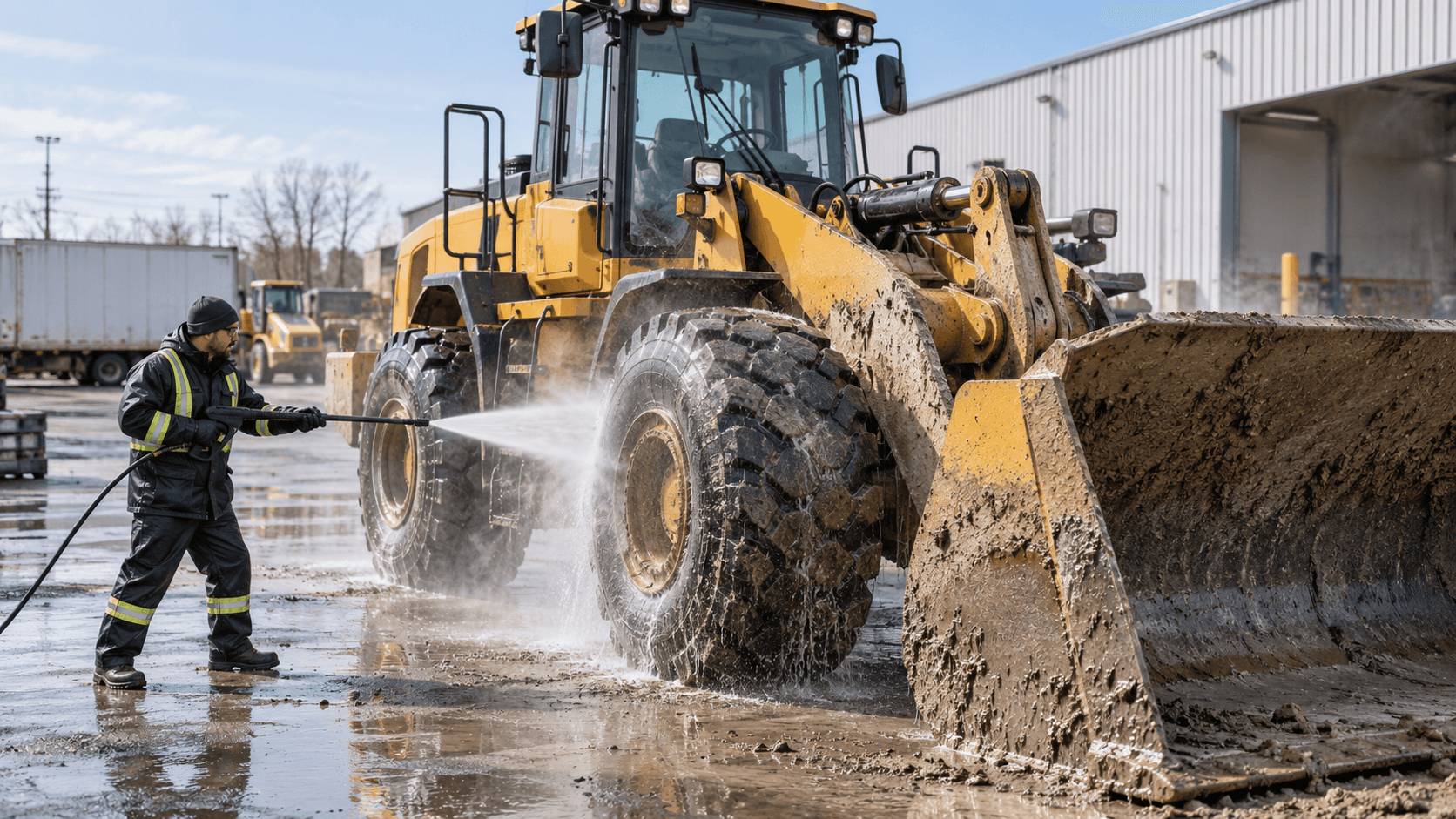
Should Equipment Be Cleaned Before Maintenance?
Cleaning before planned maintenance can often be useful. Mud and grime can make equipment more difficult to inspect and work around. Removing excessive exterior buildup before servicing gives maintenance teams a clearer working environment.
This does not mean every routine maintenance task requires a complete pressure wash. Instead, cleaning can be coordinated with larger inspections, seasonal servicing or repairs when accumulated dirt would otherwise make the work more difficult.
For businesses managing several pieces of machinery, coordinating cleaning and preventive maintenance can also reduce unnecessary scheduling interruptions.
How to Build a Heavy Equipment Cleaning Schedule
A practical equipment-cleaning schedule starts with observation. Begin by identifying which machines accumulate dirt fastest and what type of contamination each machine encounters. Equipment operating in mud may require a different routine from road-going vehicles exposed to winter salt. Machinery in dusty industrial environments may need yet another approach.
Next, connect cleaning checks with existing operational routines. Inspections at the beginning or end of a work cycle, preventive maintenance appointments, seasonal fleet preparation or project transitions can all provide opportunities to assess whether washing is needed. This approach avoids creating an unnecessarily rigid schedule.
Instead, the cleaning program becomes responsive to actual equipment conditions. For larger fleets, businesses may find it useful to classify equipment according to usage level and environment. High-use machines can be checked more frequently, while lower-use assets can follow a less intensive schedule.
Pressure Washing Individual Machines vs. an Entire Fleet
Businesses with multiple vehicles or machines also need to decide whether equipment should be cleaned individually or as part of scheduled fleet washing. Individual cleaning can make sense when one machine experiences unusually dirty conditions or requires maintenance. Fleet cleaning can be more practical when multiple vehicles or pieces of equipment operate from the same yard or facility. Scheduling several units together may also make it easier to plan work around operational downtime.
OutWash currently provides commercial fleet vehicle washing for trucks, vans and equipment as well as heavy-equipment maintenance pressure washing in Toronto and the GTA. For businesses considering professional service, the key is to develop a schedule that fits operations rather than disrupting them.
Planning Pressure Washing Around Downtime
Equipment availability matters just as much as cleaning frequency.
Construction companies, logistics operations and industrial facilities cannot always take machines out of service during peak operating hours. That makes scheduling an important part of the cleaning plan.
Where possible, washing can be coordinated with periods when machinery is already idle, such as maintenance windows, shift changes, weekends or other off-peak periods. This helps businesses maintain their equipment without unnecessarily interfering with daily operations. For companies managing larger fleets, grouping equipment according to availability can make the process more efficient. Instead of shutting down an entire operation, equipment can be cleaned in stages.
What Can Heavy Equipment Pressure Washing Remove?
Pressure washing can be useful for removing many types of exterior buildup commonly found on commercial machinery.
Depending on the equipment, surface and cleaning method, this can include mud, dust, road grime, seasonal salt residue and other accumulated dirt. Heavier grease or fluid-related contamination may require a different cleaning approach than ordinary dirt.
The surface and type of buildup should therefore be assessed before work begins. Professional cleaning should focus on matching the appropriate method to the equipment rather than treating every contaminant and every machine in exactly the same way.
When Should You Consider Professional Pressure Washing?
Some equipment can be handled through routine in-house cleaning, while larger machinery, commercial fleets and heavily soiled equipment may benefit from professional service. Professional cleaning may be particularly useful when a business has several machines to manage, requires commercial-grade equipment or needs cleaning scheduled around operational requirements.
Outwash provides professional pressure washing services for commercial properties, fleet vehicles and heavy equipment throughout Toronto and the Greater Toronto Area. The service can be coordinated around commercial operating schedules, including off-peak periods. When requesting service, businesses should provide information about the number and type of machines, their condition, site access and the type of buildup that needs to be removed. This helps determine the most appropriate cleaning approach before work begins.
Frequently Asked Questions About Heavy Equipment Cleaning
How often should construction equipment be pressure washed?
There is no universal frequency. Construction equipment should be inspected regularly and cleaned according to jobsite conditions, usage and the amount of mud, dust or other buildup present. Equipment working in difficult conditions may require much more frequent cleaning than machinery used occasionally on paved surfaces.
Should heavy equipment be washed more often during winter?
Equipment and fleet vehicles exposed to Toronto roads may require additional attention during winter because of salt, brine, slush and road grime. Cleaning frequency should reflect how much seasonal buildup the equipment experiences.
Should equipment be pressure washed before maintenance?
Cleaning can be useful before inspections or planned maintenance when excessive mud and grime make components more difficult to access or examine. The cleaning schedule can therefore be coordinated with preventive maintenance when practical.
Can every part of heavy equipment be pressure washed?
No. Heavy machinery can contain sensitive electrical components, bearings, seals, sensors and other areas that require additional care. Manufacturer guidance should always be followed, and cleaning pressure and technique should be appropriate for the machine and component being cleaned.
Can an entire fleet be pressure washed at the same time?
Fleet washing can be scheduled for multiple vehicles or machines, but the best approach depends on operational requirements and equipment availability. Businesses may choose to clean equipment in groups so that work can continue with minimal disruption.
Is there a standard Toronto heavy equipment cleaning schedule?
No. Toronto businesses should build their schedule around equipment usage, environment, seasonal exposure and maintenance requirements rather than following one fixed city-wide timetable.
Build a Cleaning Schedule Around Your Equipment
So, how often should heavy equipment be pressure washed?
The most useful answer is: whenever operating conditions, seasonal exposure or maintenance requirements make cleaning necessary. A machine working every day in mud or winter road conditions will naturally require a different routine from equipment operating occasionally in a relatively clean environment. By monitoring buildup, coordinating cleaning with inspections and adjusting the schedule throughout the year, Toronto businesses can create a maintenance routine that makes sense for their actual operations. If your fleet or machinery needs more than routine in-house cleaning, OutWash provides professional pressure washing for commercial fleets and heavy equipment throughout Toronto and the GTA.
Contact OutWash to discuss your equipment, operating schedule and cleaning requirements and determine an appropriate pressure-washing plan for your fleet.