
How to Choose a Commercial Snow Removal Company in Toronto
Choosing between commercial snow removal companies in Toronto requires more than comparing prices. Property managers and business owners need a reliable contractor with suitable equipment, proper insurance, clear response times and a detailed plan for plowing, de-icing and site documentation. This guide explains what to evaluate before selecting a snow removal company for your commercial property.
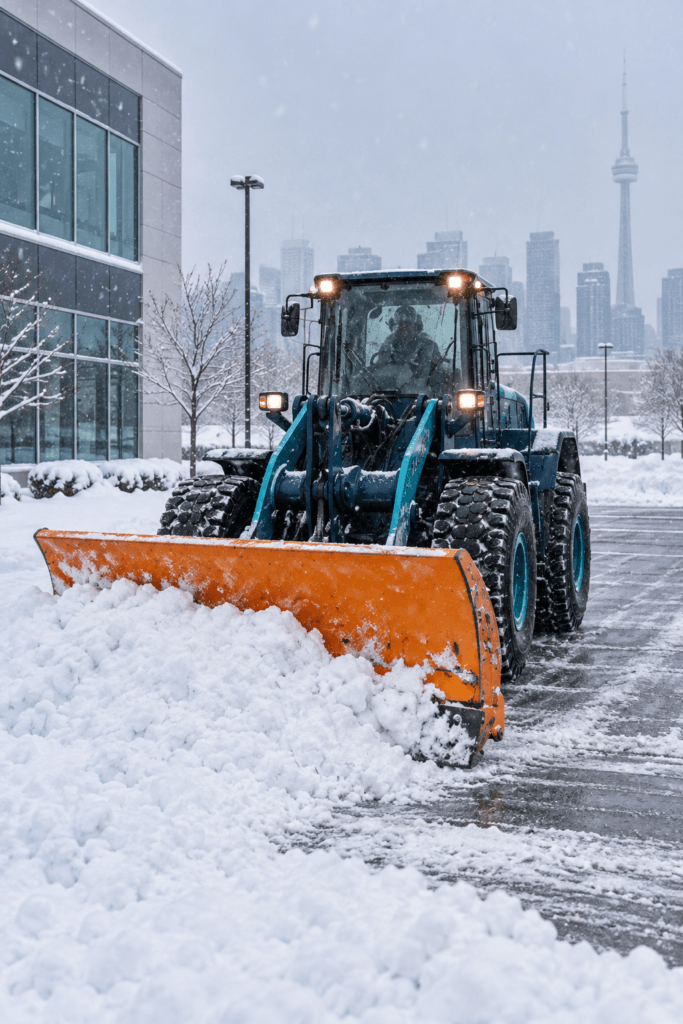
Confirm the Commercial Snow Removal Service Scope
Before comparing contractors, confirm exactly what each snow removal agreement includes. Some companies provide plowing only, while others may include sidewalk clearing, salting, de-icing, snow relocation and off-site hauling. The required service will depend on the property’s size, traffic and operating hours.
Ask whether the proposed service includes:
- Parking-lot and driveway plowing
- Sidewalk and entrance clearing
- Salting and de-icing
- Snow-pile relocation
- Off-site snow hauling when required
- Loading-area and emergency-access clearing
- Service reports and weather documentation
A clearly defined scope helps prevent unexpected charges and ensures that important areas are not overlooked during a storm.
Review Response Times and Storm Procedures
A commercial snow removal company should explain when service begins and how properties are prioritized during heavy snowfall. Response expectations should be written into the agreement rather than discussed only verbally.
Ask each contractor:
- What snowfall depth triggers service?
- How quickly will the crew arrive after the trigger is reached?
- Is the property serviced once or repeatedly during a long storm?
- How are overnight storms handled?
- Is emergency service available?
- How will delays or severe weather conditions be communicated?
For properties that operate early in the morning or around the clock, confirm that entrances, sidewalks and essential access routes will be cleared before employees, tenants or customers arrive.
Check the Contractor’s Equipment and Backup Plan
The contractor should have equipment suitable for the size and layout of your commercial property. A small retail plaza, warehouse, condominium and large parking facility may require different plows, salt spreaders and snow-moving equipment.
Ask the company to confirm:
- What equipment will be assigned to your property?
- Can the equipment safely access narrow entrances and loading areas?
- Is backup equipment available if a machine breaks down?
- Are additional crews available during major storms?
- Where will snow be piled without blocking visibility, parking or drainage?
- Can accumulated snow be relocated or hauled away when necessary?
A reliable backup plan reduces the risk of missed service when equipment fails or several properties require attention at the same time.
Verify Insurance, Training and Safety Procedures
Commercial snow removal involves vehicles, heavy equipment, slippery surfaces and work around pedestrians. Before signing an agreement, request proof that the contractor carries appropriate commercial insurance and follows documented safety procedures.
Confirm the following:
- The contractor has active commercial liability insurance
- Workers are properly trained to operate the assigned equipment
- Crews use safe procedures around pedestrians and parked vehicles
- Incidents and property damage are documented
- The company has a process for reporting hazards
- Subcontractors, if used, meet the same requirements
Do not rely only on statements made during a sales conversation. Request current documentation and confirm what coverage applies to the proposed work.
Evaluate Salting and De-Icing Services
Plowing removes accumulated snow, but it may not eliminate compacted snow or ice. Ask how the contractor handles parking areas, sidewalks, entrances, ramps, loading zones and other high-traffic locations.
Important questions include:
- Is salting included in the contract or charged separately?
- What conditions trigger a de-icing visit?
- Which materials will be used?
- How will the contractor prevent excessive material application?
- Are return visits available when surfaces refreeze?
- Who authorizes additional treatments?
The agreement should clearly explain whether de-icing is automatic, requested by the property manager or billed separately after each application.
Ask About Documentation and Communication
Detailed service records help property managers confirm when work was completed and identify recurring problem areas. Documentation may also support internal maintenance records and incident reviews.
Ask whether the contractor provides:
- Arrival and departure times
- Services completed during each visit
- Weather and site-condition notes
- Photographs of completed work
- Records of salt or de-icing applications
- Reports of blocked areas or site hazards
- A clear point of contact for questions and emergencies
Communication is particularly important during prolonged storms, when crews may need to return several times as conditions change.
Request a Property Assessment Before Signing
A contractor should inspect the property before recommending a service plan. This allows the company to identify entrances, sidewalks, fire routes, loading areas, drainage points, snow-storage locations and obstacles that may become hidden after snowfall.
During the assessment, discuss:
- Priority entrances and pedestrian routes
- Operating and delivery hours
- Areas that must remain accessible
- Suitable snow-storage locations
- Drainage and refreezing concerns
- Curbs, speed bumps and other obstacles
- Areas where snow cannot be piled
- Access requirements for emergency vehicles
A site-specific plan is more reliable than a general quotation prepared without inspecting the property.
Compare Contract Terms and Pricing Carefully
The lowest proposal may not provide the best coverage. Compare what is included, when service is triggered and which services may result in additional charges.
Commercial snow removal agreements may be structured as:
Seasonal Contracts
A seasonal agreement generally covers an established period for a fixed price, subject to the conditions and limits stated in the contract. This can make budgeting more predictable.
Per-Visit or Per-Push Pricing
The property is charged whenever plowing or another defined service is completed. Costs can vary depending on the number and severity of winter events.
Per-Centimetre or Tiered Pricing
Charges may increase according to snowfall depth. Review how accumulation is measured and what happens during long storms requiring several visits.
Before choosing a proposal, confirm whether the price includes sidewalks, de-icing, relocation, hauling, emergency visits and repeated service during extended snowfall.
Watch for Warning Signs
Be cautious when a commercial snow removal company:
- Provides a quotation without asking about the property
- Cannot provide proof of insurance
- Does not define service triggers or response expectations
- Uses unclear pricing or leaves major exclusions unexplained
- Has no backup equipment or staffing plan
- Does not offer written service records
- Cannot explain how emergencies are handled
- Promises that every surface will remain completely free of snow and ice at all times
A professional contractor should provide clear answers and document the agreed service responsibilities.
Commercial Snow Removal Company Checklist
A professional contractor should provide clear answers and document the agreed service responsibilities.
Before making a final decision, confirm that the contractor can provide:
- A written and property-specific scope of work
- Clearly defined snowfall and de-icing triggers
- Appropriate equipment for the site
- Backup equipment and staffing
- Proof of relevant commercial insurance
- Documented safety procedures
- Reliable storm communication
- Service records and site-condition reports
- Clear pricing and additional-charge terms
- A plan for entrances, sidewalks, parking areas and emergency routes
This checklist makes it easier to compare commercial snow removal companies in Toronto using service quality and reliability rather than price alone.
Choose a Commercial Snow Removal Company with a Clear Plan
Choosing a contractor requires more than finding the lowest price. Review the company’s response procedures, equipment, insurance, de-icing plan, communication process and service documentation before signing an agreement.
OutWash provides commercial snow removal services for businesses and managed properties in Toronto. Contact the team to request a property assessment and discuss a snow-removal plan based on your site’s access requirements, operating hours and priority areas.
Frequently Asked Questions
When should a Toronto business arrange commercial snow removal?
Businesses should arrange service before winter conditions begin. Early planning provides time for a property assessment, contract review and preparation of a site-specific snow-management plan.
What should a commercial snow removal contract include?
The contract should define the service area, snowfall trigger, response expectations, plowing and de-icing responsibilities, snow-storage plan, pricing, exclusions, documentation and emergency procedures.
Is salting normally included with commercial snow removal?
It depends on the agreement. Salting and de-icing may be included, billed per application or performed only after receiving authorization. Confirm the arrangement before signing.
Why are service records important?
Service records show when crews attended the property, what work was completed and what site conditions were observed. They help property managers monitor service and maintain accurate property records.
Should the contractor inspect the property first?
Yes. A site assessment helps identify priority areas, obstacles, drainage concerns, snow-storage locations and access requirements before winter service begins.